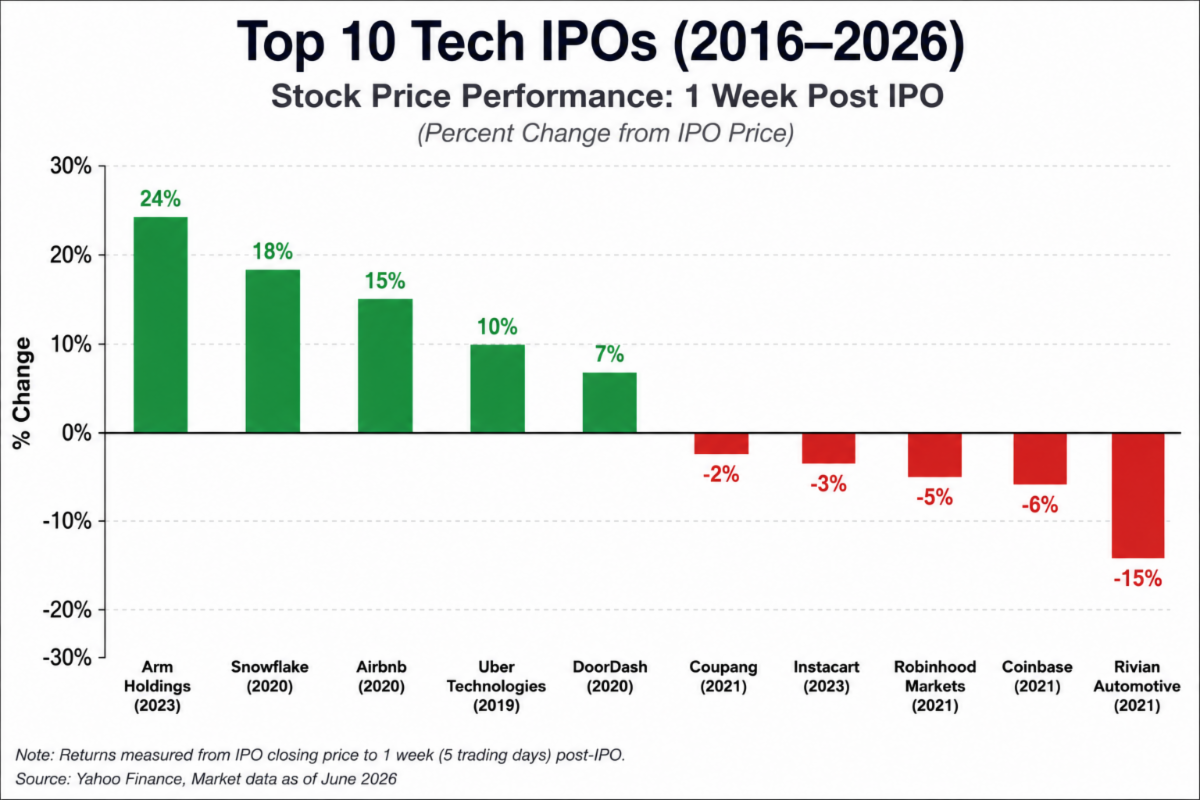
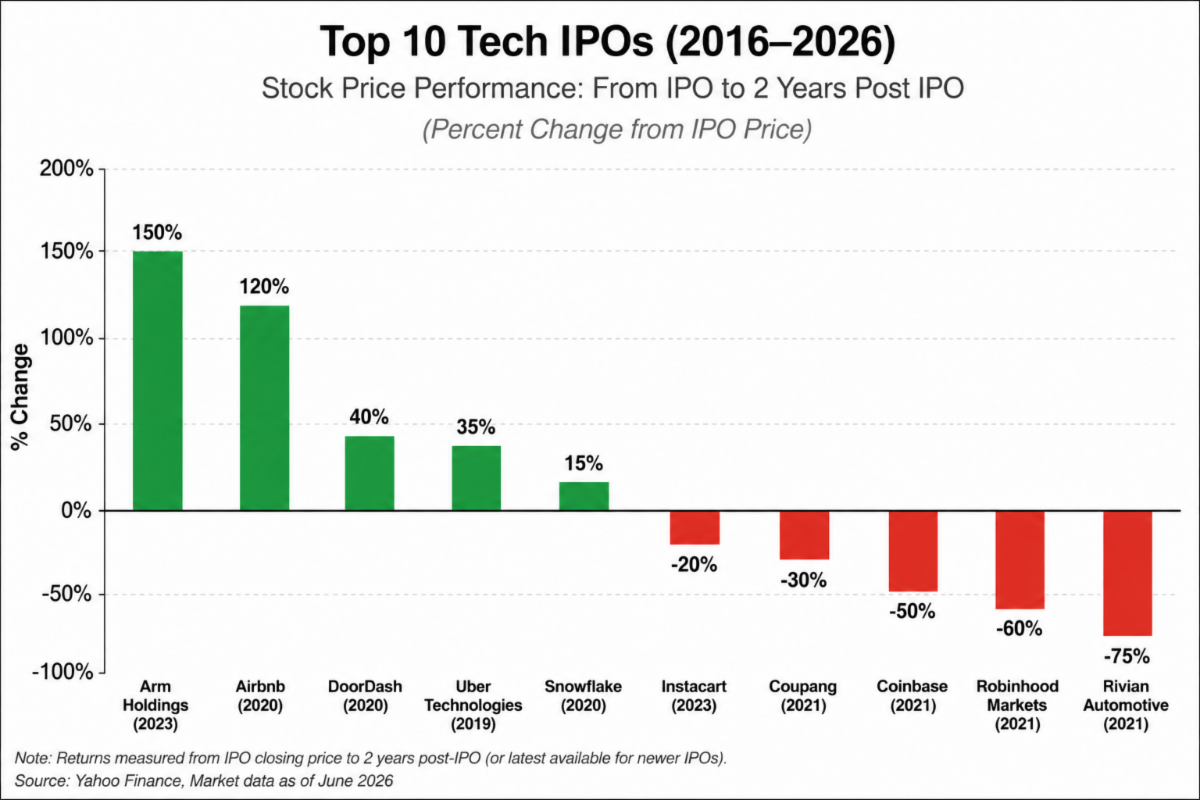
Well, it's been a week since SpaceX hit the public markets, and I think it's safe to say that Elon Musk is firmly the world's first trillionaire. Shares were up 49.5% as of Thursday's market close, rising from the initial public offering price of $135 per share to $201.80 per share. Because our custodian, Charles Schwab, had access to pre-IPO shares, we polled clients to see whether anyone wanted to request an allocation. The range of responses was fascinating—from zero interest, to enthusiastic demand, to concerns about valuation. Now that the dust has settled a bit, I thought it would be interesting to share who determines IPO pricing and how SpaceX compares to other major tech IPOs. When a company is first formed, its share value is based largely on what founders, investors, and the market believe the company is worth. As the company grows, valuations are influenced by private funding rounds and approved secondary-market transactions between investors such as hedge funds, institutional investors, and family offices. This is somewhat analogous to selling an ownership interest in an optometry practice or another privately held business. These transactions often serve as an important reference point when determining a potential IPO price. To go public—that is, to list shares on a public exchange such as the Nasdaq or the New York Stock Exchange, where everyday investors can buy and sell shares—the company, its board of directors, and the investment banks underwriting the offering work together to determine an appropriate price. Typically, management and the underwriters conduct a "roadshow," meeting with institutional investors to gauge demand and help finalize the offering price. So, is SpaceX worth $201.80 per share? According to the investors willing to buy it at that price, the answer is yes. Whether it is worth that amount based on traditional valuation metrics is more difficult to determine. One common valuation measure is the price-to-earnings (P/E) ratio. For reference, NVIDIA currently trades at roughly 31–32 times earnings. Coca-Cola trades at approximately 28 times earnings. And Elon Musk's other well-known company, Tesla, trades at a whopping 350 times earnings. So, is SpaceX's performance unusual? Here's how the top 10 tech IPOs of the past decade performed one week after their IPOs and two years later. Based on these comparisons, SpaceX isn't just an outlier—it's out of this world (forgive the cheesy sense of humor). |